presentations

Expert Voices for your classroom

Bring authentic perspectives and professional insights to your school community through our versatile Speaker Series to help students and staff deepen their understanding of Islam and the Muslim experience. We offer a diverse roster of professional speakers equipped to deliver engaging, age-appropriate presentations for audiences ranging from Elementary and High School to Post-Secondary institutions

Our presentations are developed in collaboration with certified educators, ensuring alignment with your school board or educational institute's policies and standards. This partnership guarantees relevant, high-quality content tailored to your needs

Presentations

A Canadian Muslim-led speakers network bringing authentic voices into schools across the country. Our engaging presentations explore history, identity, and contemporary issues, helping students feel recognized, valued, and empowered. Through real-life stories and open dialogue, we create spaces where students can connect with themselves, each other, and the world around them. Partnering with educators, our sessions complement classroom learning while promoting inclusion, belonging, and culturally responsive education
Explore our presentation series and discover topics that spark meaningful conversations and inspire students to feel seen, heard, and understood

Muslim Perspectives on Identity, Society, and Change

Grounded in timeless Islamic principles and supported by modern research, these presentations are designed to inspire and empower youth to meet today’s challenges with resilience and strong character. Our speakers bring years of experience in youth programming, mentorship, and counselling, with firsthand knowledge of issues such as social media pressures, mental health, and addictions. Their engaging approach equips students with practical tools, positive values, and the confidence to navigate the complexities of modern life

Presentation Highlights
  • Contributions of Muslims in Science, Technology, and the Arts
  • Faith, Facts, and combatting Islamophobia
  • Ramadhan and the Benefits of Fasting
  • Islamophobia and Resilience
  • Youth Challenges: Social Media, Mental Health, and Addictions
  • Building Strong Identity and Character
  • Equity, Diversity, and Belonging in Schools
Presentation Format

Each presentation can be delivered in any of the following formats:

  • School-wide assemblies
  • Professional development sessions for school or board staff
  • Small, focused groups or classroom settings
Curriculum Connections

Each presentation aligns with Ontario curriculum expectations in courses such as Equity and Social Justice (HSE4M), World Cultures (HSC4M), Families in Canada (HHS4U), World Religions (HRT3M/HRF3O), Canadian and International Politics (CPW4U), and others. Presentations support the Culturally Responsive and Relevant Pedagogy (CRRP) framework by highlighting diverse perspectives, affirming student identities, and connecting historical contributions of Muslims to modern contexts

Grade Range

Presentations are suitable for students from Grades 1–12 and can be tailored to the needs of specific age groups

Relevant Secondary School Program Areas
  • Social Sciences
  • Arts
  • Sciences
  • Technological Education and Skilled Trades
  • English/Languages
  • Experiential Learning and Co-op
Bookings and Contact

To book any of our presentations, please contact us at:

  • Email: education.partnerships@ahmadiyya.ca

Muslim Innovations

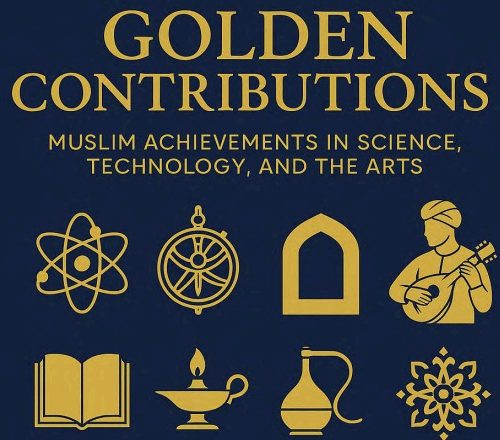
This presentation explores the often-overlooked contributions of Muslim scholars, inventors, and artists from the Golden Age of Islam to the present day. Students will learn about advances in mathematics (algebra, algorithms, geometry), medicine (hospitals, surgery, optics), astronomy (astrolabe, celestial charts), engineering (water clocks, bridges, architecture), and the arts (calligraphy, design, literature). It highlights how these discoveries influenced the Renaissance and continue to shape our world today. The session challenges stereotypes and fosters pride by affirming diverse cultural contributions
Curriculum Connections
  • CHW3M:
    • assess the artistic and/or scientific contributions of various individuals to the identity and/or culture of the society/civilization in which they lived; assess the significance of scientific and/or technological contributions from various societies/civilization
  • MTH1W:
    • provide opportunities for students to recognize that mathematical knowledge has been developed by every culture around the globe; research an algebraic concept to tell a story about its development and use in a specific culture, and describe its relevance in a current context
  • SNC1W:
    • assess how the development and application of science is influenced by social, economic, and cultural contexts. Students analyze the contributions to science by people with diverse lived experiences and from various communities
  • HHS4U:
    • assess the contributions to and influence on various cultures/societies, including Canada, of a diverse range of ethnocultural groups and individuals from those groups
  • HRT3M:
    • analyze the ways in which various religions and belief traditions are reflected in specific works of art, architecture, music, literature, and dance; in styles of dress; and in cuisines
  • HSC4M:
    • assess the broad significance of historic cultural developments associated with a diverse range of ethnocultural groups
  • CHM4E:
    • describe some educational developments and/or practices during the Middle Ages, and explain their significance
  • Arts:
    • explore the design elements of Arabic calligraphy
  • Social Sciences:
    • history of civilizations, global interconnectedness
  • CRRP:
    • validate diverse identities by embedding Muslim contributions in curriculum, dismantling Eurocentric narratives, and creating inclusive learning spaces; draw attention to the contributions and perspectives of historically marginalized groups
Grade Range

Grade Range: 1–12

Relevant Program Areas
  • Sciences
  • Math
  • Arts
  • Technological Education
  • Skilled Trades
  • Social Sciences
  • SHSM (ICT, Health, Arts & Culture)

Arabic Calligraphy

A skilled Arabic calligrapher will guide students through the timeless art form that has inspired Islamic culture for centuries. In this interactive session, calligrapher will introduce the basics of Arabic calligraphy, demonstrate traditional techniques, and share insights into the creative process behind shaping letters into flowing designs. Students will gain a deeper appreciation for calligraphy as both a spiritual and artistic expression, while observing live demonstrations that bring the art to life in front of them
Focus Areas and Demonstrations
  • Introduction to the beauty of Arabic calligraphy
  • Demonstration of basic strokes, tools, and techniques
  • Exploring how calligraphy combines discipline, creativity, and spirituality
  • Get your name written in Arabic using calligraphy
Curriculum Connections
  • Elementary Curriculum
    • Visual Arts: Concepts: line, shape, form, pattern, symmetry, positive/negative space; cultural symbols & design
  • Secondary Arts Curriculum (Ideas):
    • Developing aesthetic awareness and using the creative process
    • Understanding cultural traditions and innovations
    • Creating and interpreting art works on their own and with others
  • AVI3M/AVI4M:
    • analyze the function and social impact of different kinds of art works in both past and present societies
  • AEA3O/4O:
    • demonstrate an understanding of symbols and themes associated with art works produced by various cultures from around the globe and of past and present influences on works from various arts disciplines
  • ASM3M/4M:
    • analyze in detail the connections between a contemporary media art work and related historical art works
    • demonstrate an understanding of the sociocultural and historical contexts of media arts

Islam, A peaceful way of life

This presentation helps students build a clear understanding of Islam by covering its core beliefs, practices, and values. It addresses common misconceptions about topics such as women’s rights, modesty, and jihad, showing how Islamic teachings promote peace, equality, and service to humanity. By highlighting Islam’s true message, the presentation fosters respect, inclusivity, and resilience against Islamophobia in schools
Curriculum Connections
  • HRT3M / HRF3O:
    • explain how differing interpretations of specific
      teachings have arisen within various faith communities; demonstrate an
      understanding of the commonalities among various world religions and belief traditions; identify diverse religions and belief traditions that are
      found in Canada
  • HSC4M:
    • demonstrate an understanding of artistic expressions,
      philosophies, and religious/spiritual beliefs found within specific cultures;
      demonstrate an understanding of various religious or spiritual beliefs
  • CHM4E:
    • compare some key beliefs and practices associated with two or more religious/spiritual traditions
  • CRRP:
    • validate Muslim student experiences, affirm diversity, and create inclusive dialogue.; draw attention to the contributions and perspectives of historically marginalized groups
Grade Range

Grade 3 – 12 (presentation will be simplified for elementary students)

Relevant Program Areas
  • Social Sciences
  • Sciences (Health / Nutrition)
  • Life Skills
  • Outdoor Education (Mind-Body Balance)

Ramadan and fasting

This presentation introduces students to the meaning and practices of Ramadhan, the sacred month of fasting observed by Muslims worldwide. It explores the daily routine of fasting students, highlights the spiritual, mental, and physical benefits of fasting, and debunks common myths about Ramadhan. Educators and students will gain practical insights on how to support Muslim students during this month, while also appreciating universal values of discipline, empathy, and community
Note: This presentation can also be tailored specifically for student assemblies and classroom settings
Curriculum Connections
  • HRT3M / HRF3O:
    • explain how differing interpretations of specific teachings have arisen within various faith communities; demonstrate an understanding of the commonalities among various world religions and belief traditions; identify diverse religions and belief traditions that are found in Canada
  • HSC4M:
    • demonstrate an understanding of artistic expressions, philosophies, and religious/spiritual beliefs found within specific cultures; demonstrate an understanding of various religious or spiritual beliefs
  • CHM4E:
    • compare some key beliefs and practices associated with two or more religious/spiritual traditions
  • Sciences:
    • linking fasting to health, nutrition, and human physiology
  • CRRP:
    • validate Muslim student experiences during Ramadhan, affirm diversity, and create inclusive dialogue; draw attention to the contributions and perspectives of historically marginalized groups
Grade Range

Grade 3 – 12 (presentation will be simplified for
elementary students)

Relevant Program Areas
  • Social Sciences
  • Sciences (Health / Nutrition)
  • Life Skills
  • Outdoor Education (Mind-Body Balance)

Mythbusters! Muslim Woman's Response

This engaging presentation challenges stereotypes by sharing stories of influential Muslim women in history—scholars, leaders, and pioneers who shaped education and society. It also tackles misconceptions around jihad and terrorism, and highlights Islam’s long-standing principles of tolerance and coexistence
Focus
  • Breaking myths
  • Promoting understanding
  • Empowering students to recognize resilience, courage, and leadership in Islamic heritage
Curriculum Connections

Influential Muslim Women

  • HRF3O: C1.2
    • Identify major figures from the history of various world religions
  • HRF3O: B1.1
    • Identify and describe garments and styles of personal adornment typical of various cultures
  • CHW3M: C3.3
    • Assess the artistic and/or scientific contributions of various individuals to the identity and/or culture of the society/civilization in which they lived
  • HSC4M: C3.5
    • Assess the broad significance of historic cultural developments associated with a diverse range of ethnocultural groups
  • HSE4M: B3.1
    • Analyze stereotypes found in the media and popular culture, and assess their impact

Terrorism and Jihad

  •  HRT3M: C2.2
    • Explain concepts associated with the journey of life … e.g., jihad; D2.4 compare sacred writings and oral teachings; D1.6 explain how differing interpretations of specific teachings have arisen within faith communities
  • CPW4U: B3.5
    • Analyze how religion influences politics in and relations between various countries, including Canada
  • HSC4M: D1.2
    • Analyze the potential impact on cultural identity and on the relations between cultural groups of cultural stereotypes, labelling, and misrepresentations found in mainstream media and popular culture
  • CHM4E: B4.3
    • Analyze the role of religion/spirituality in selected societies
      during this period

Tolerance & Islam

  • CHY4U: E1.4
    • Explain the significance of the contributions of some societies /
      civilizations to religion and philosophy
  • CHE3O: C3.2
    • Analyze the role of religion/spirituality in various societies during
      this period, including how religion contributed to their identity and heritage
  • HSC4M: C1.3
    • Demonstrate an understanding of various religious or spiritual beliefs
Grade Range

Grade Range: 7–12

Relevant Program Areas
  • Social Sciences
  • English / Languages
  • Arts

Empowering minds, inspiring hearts

Connect with us to bring transformative learning to your community!
To book a speaker, request a consultation, or a custom workshop, contact us at

Copyright 2026 - MuslimEdConnections