Creating an identity-affirming school environment is a core component of Social-Emotional Learning (SEL) and student well-being. When educators proactively remove barriers, they move beyond simple accommodation toward a system of true, inclusive design.
It is important to recognize that the Muslim community is diverse, encompassing various schools of thought, cultural traditions, and levels of practice. A "one-size-fits-all" approach may not meet the needs of every family. We encourage educators to build Relational Trust with students and their parents to understand their specific needs, as individual decisions regarding practice are deeply personal
To support Muslim students effectively, educators benefit from a grounded understanding of the faith-based contexts and identities that shape their students’ daily lives. These resources move beyond surface-level awareness to offer clear insight into Muslim ways of knowing and being, explaining the spiritual and cultural values that inform students’ perspectives. They provide practical guidance on key school-based considerations—such as religious observances, dietary needs, and access to prayer space—while also outlining the significance behind these practices. By engaging with this knowledge, educators can build a strong foundation for recognizing and affirming Muslim student identities, proactively creating culturally responsive learning environments that bridge institutional expectations with student needs and ensure every learner feels understood, respected, and supported within the school community
To ensure all students can participate with dignity, school dress codes and athletic uniforms should offer versatile, modest options:
Standardize the availability of long-sleeved performance shirts, full-length track pants, and tops/hoodies that provide hip coverage. For swimming, allow the option of “quick dry” material, long shorts/tights, swimming tops or the “burkini”
When ordering team kits or school uniforms, include modest-cut styles as a standard choice to avoid singling students out
Providing specific modest athletic gear rather than layering street clothes under uniforms—ensures students remain safe and comfortable during physical activity
Ensuring Halal options are available is a hallmark of an inclusive school nutrition program:
Offer certified Halal meat options. While vegetarian choices are generally permissible, they should not be the only option provided
Prevent contact with pork products or non-Halal fats. This includes using separate grills, utensils, and preparation surfaces
Many candies and yogurts contain animal-based gelatin. Proactively sourcing items with vegetable or Halal-certified beef gelatin supports inclusive snack and vending programs
For BBQs or fundraisers, utilize a separate, designated grill for Halal-certified products to ensure dietary integrity
Ontario’s Equity Action Plan encourages flexibility to ensure curriculum delivery respects parental and student perspectives, ensuring assessment is fair and respectful of a student’s lived experience
Some families view the education of specific topics within the Human Development and Sexual Health curriculum as a primary parental responsibility. In accordance with Ministry policy, provide a clear, respectful process for families to request an exemption. Ensure the student is provided with a supervised, alternative learning space or a different curriculum-related project to maintain their academic standing and dignity
Participation in Dance or certain music activities may conflict with religious values regarding modesty. Offer alternative ways to meet curriculum expectations, such as a research project, a written critique, or historical analysis
Islam promotes the segregation of sexes. For the comfort of students and families, it is recommended that Muslim students are paired/grouped with individuals of the same sex rather than creating a mixed group. This is especially important when the group work requires time beyond school hours
The Islamic (Lunar) calendar shifts annually. Avoid scheduling high-stakes assessments (exams, EQAO, major unit tests) during the month of Ramadan, particularly the final ten days. If a student is fasting, energy levels are typically highest in the morning; schedule assessments early in the day
If an assessment occurs during sunset, ensure students have a 10–15 minute break to break their fast with water/food and a quiet space to offer their evening prayer
Using Universal Design principles, schools can create spaces that benefit the entire student body while meeting specific needs:
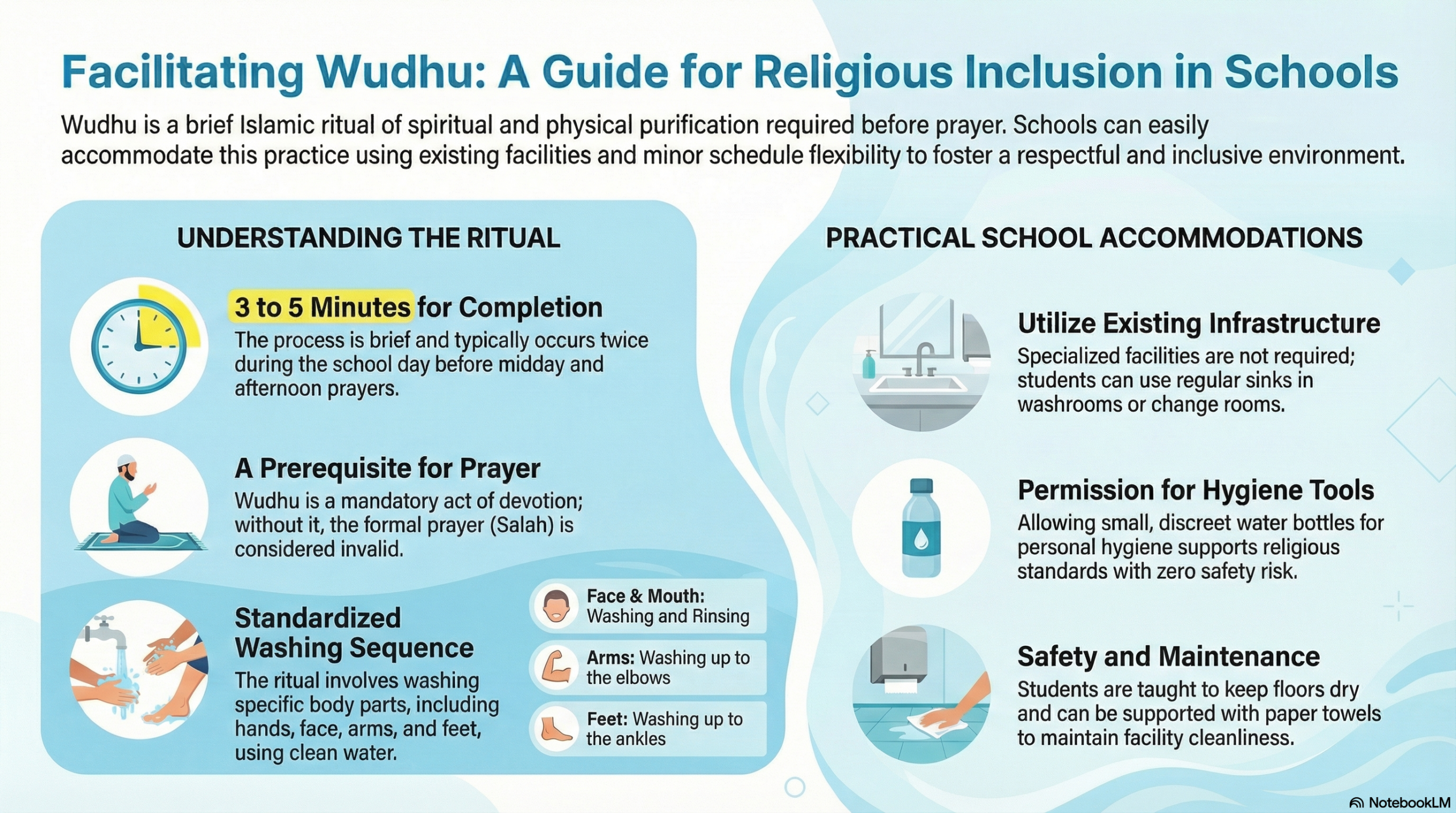
Access to water for ritual washing before prayer is required. Proactive school designs now include integrated foot-washing stations in or near washrooms to ensure safety, hygiene, and dignity
During school dances or Halloween celebrations, provide a supervised, quiet alternate space (like a library) for all students who may feel uncomfortable due to personal, religious or cultural reasons
True inclusion is a journey of collaboration. By consulting with Muslim stakeholders and engaging in Courageous Conversations with your school’s Equity Committee, you can ensure your school is a place where every student especially those from historically underserved communities—has a clear path to success
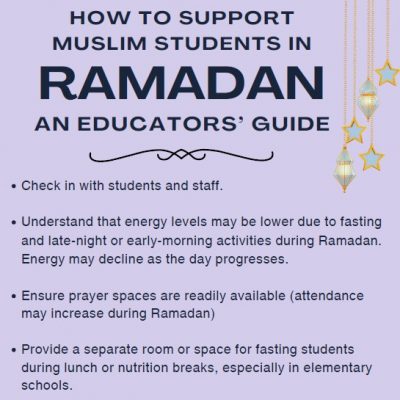
A strong sense of belonging supports student success and well-being. Educators can foster inclusive environments by respecting students’ identities and experiences. By applying this understanding in teaching and school culture especially during Ramadan, educators help Muslim students feel seen, supported, and valued
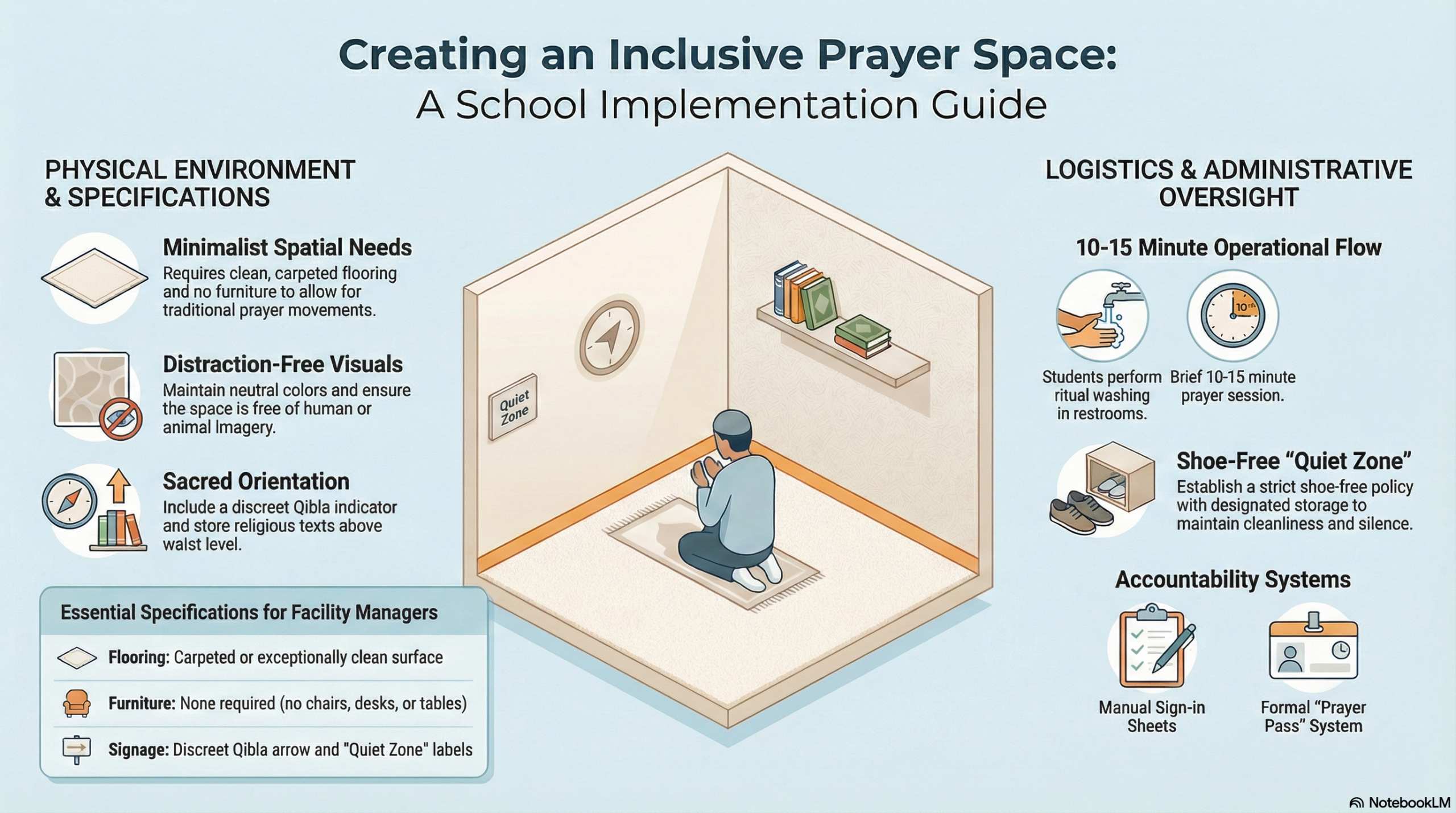
A dedicated prayer space within a school supports Muslim students in fulfilling their daily Salah with minimal disruption to their academic schedule. The space is designed to be inclusive, low-cost, and easily managed within existing administrative systems. Considerations include seasonal prayer times, appropriate environmental conditions, and an efficient student flow to ensure smooth integration into the school day
Connect with us to bring transformative learning to your community!
To book a speaker, request a consultation, or a custom workshop, contact us at
Copyright 2026 - MuslimEdConnections